Motorbikes Rage & Safety measures
MotorBiking is a rage and a growing sport which is prominent not only among the youth in India but around the globe. In present scenario youths are not interested to adhere to any rules and regulations of motor biking. Every year, thousands of people are seriously injured or killed in motorcycle accidents as motorcyclists are more likely to be involved in road traffic accidents than other drivers.
Nevertheless we are also wary of the fact that this two-wheeler machine also carries risks which are quite fatal. It should be noted that youths are often rebuked for speeding bikes on the streets and infact some are also refrained from purchasing one due to the aforesaid consequences. Every year, thousands of people are seriously injured or killed in motorcycle accidents as motorcyclists are more likely to be involved in road traffic accidents than other drivers.
According to the Global Status Report on Road Safety unveiled by the World Health Organization in 2008, over 1.2 million people die in road accidents and between 20 and 50 million people get injured every year around the globe. The survey which was conducted in 2008 in 178 countries, covering 98 percent of the population showed that 50 percent of people who die in road accidents are pedestrians, cyclists and motorbike users.
“Motor Biking is always fatal” is readily accepted by people at large but we can still find myriad bikers on the streets. It is not humanly possible to stop this trend but we can atleast change the way people perceive it. Motor biking can and will be safe. It is high time we should inform and educate public that this growing sport can be safe and sound.
There are some rules which the biking fraternity should religiously follow on road.
Tips for motorcyclists at a glance:
· Before every ride, check to make sure the bike is in good condition:
Checking the motorcycle itself before you begin riding such as tires and bike insurance documents. Make sure that it is in good riding condition to avoid any problems on the road.
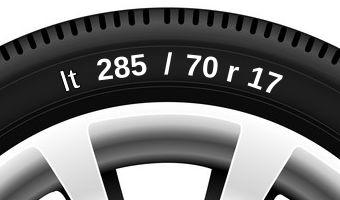
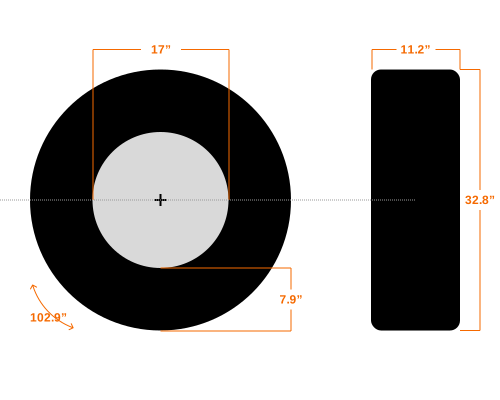
* Tyres and Wheels: Check your air pressure, tread, spokes, bearings and brakes. Look for no cracks or damage of any kind.
* Controls: Check levers, switches, cables, hoses and the throttle.
* Lights and Electrics: Check that lights and electric switches are in working condition.
* Oil and Other Fluids: Check oil, coolant, hydraulic fluid and all fuel levels. Don’t forget to look for leaks.
* Chassis: Check the suspension and drive components. Adjust for any passenger or load. Your owner’s manual will list the suspension setting for your motorcycle.
* Sidestand: Check the tension spring.
· Always wear protection:
Of course, you should never, ever ride a motorbike without a helmet. Helmets save lives so make sure you strap one on, before you hit the road. Make sure it is a noticeable colour, and maybe add some reflective tape to the sides and the back for greater visibility.
· Attire:
One important aspect of motor biking is what clothing you should wear. You will be riding the bike in the open, therefore, the clothes you were are imperative for the following reasons. If you encounter strong wind, it can become very dangerous. You will want to wear clothes that provide protection against these elements. Although the windshield of your motor bike will provide some protection, they are not adequate in protecting you all the time and under all circumstances. Don’t forget about your clothing. Protective clothing can protect you from weather and debris while driving and can also serve as a buffer if in a crash.
· Keep your eyes on the road:
When riding a motorbike, it is your responsibility to ride safely and take riding in traffic seriously. Look well down the road at where you’re going. Watch for upcoming traffic, curves in the road, bumps, garbage, potholes, cracks, stones, spills, and puddles.
· Drive defensively
Avoid tailgating and always maintain a safe distance between you and other drivers. Even a minor fender bender can cause serious injuries for motorbike riders. You can be thrown from your bike and sustain road rash, serious injuries and even be at risk of getting hit by a passing car. Be aware of your surroundings and the road you are driving on. The pavement may not always be smooth. Watch for potholes, rocks and debris in the roadway. As much as possible, always try to be a defensive driver.
The grave repercussions stemming from biking should be minimised and an effort should be taken to reign in these rule breakers. All government bodies, academic institutions, professional organizations, nongovernmental organizations and authorized bodies in this sphere should make a joint effort in fostering the safety awareness among bikers and help in alleviating tragedies on the roads.
Liked it
Email
RSS
Twitter


October 27, 2011
Very great tips